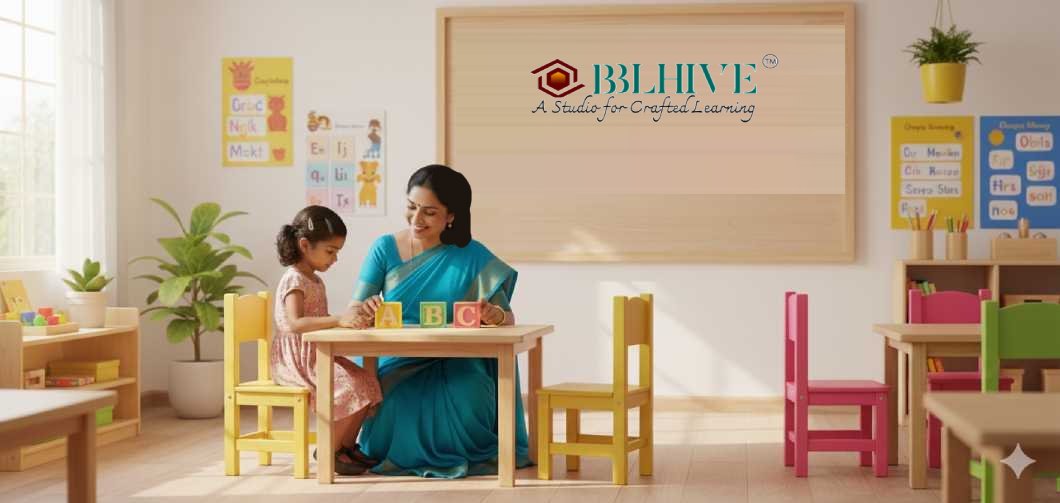
The Foundation Cell is the base of The HiveJunior Framework, where every learner begins their journey with personalised, one-on-one teaching designed around their unique pace, profile, and needs.
Each child receives individualized instruction that bridges foundational gaps and builds essential skills through multisensory, structured, and adaptive learning methods. The goal is to nurture confidence, curiosity, and a love for learning, one lesson, one learner at a time.
Every learner’s journey begins with a personalized plan based on diagnostic insights.Lessons are tailored to meet the learner where they are — adjusting pace, strategy, and content dynamically.
No two learners are the same; so no two programs are alike.
Systematic, multisensory phonics instruction helps learners connect sounds to symbols, decode accurately, and develop early reading fluency.
Connecting sounds, building meaning
Through structured, one-on-one reading sessions, learners move from decoding to fluent, expressive, and meaningful reading — with constant teacher feedback and guided support.
Reading with understanding, not just accuracy.
Explicit, pattern-based spelling instruction helps learners understand the logic behind words.Each session is personalized — focusing on the learner’s current vocabulary and writing needs.
Teaching spelling as a system, not a list.
Individualized handwriting support focuses on fine motor control, letter formation, and sentence construction. Learners gradually transition from guided writing to confident, independent expression.
Every word formed builds confidence.
Concept-based instruction using manipulatives, visuals, and guided reasoning helps learners understand why numbers work — not just how to calculate.
Laying the groundwork for mathematical thinking.
Activities build attention span, sequencing, and working memory — essential foundations for future academic success. These skills are developed through short, one-on-one cognitive games and problem-solving activities.
Training the brain to learn efficiently.
Each session reinforces effort, progress, and small successes. By celebrating individual achievement, learners develop a positive relationship with learning and a stronger sense of self-worth.
Confidence grows when learning feels possible.
”Empowering young minds through structured literacy, confidence-building, and lifelong learning.”
2025. BBLHive - All Rights Reserved.